
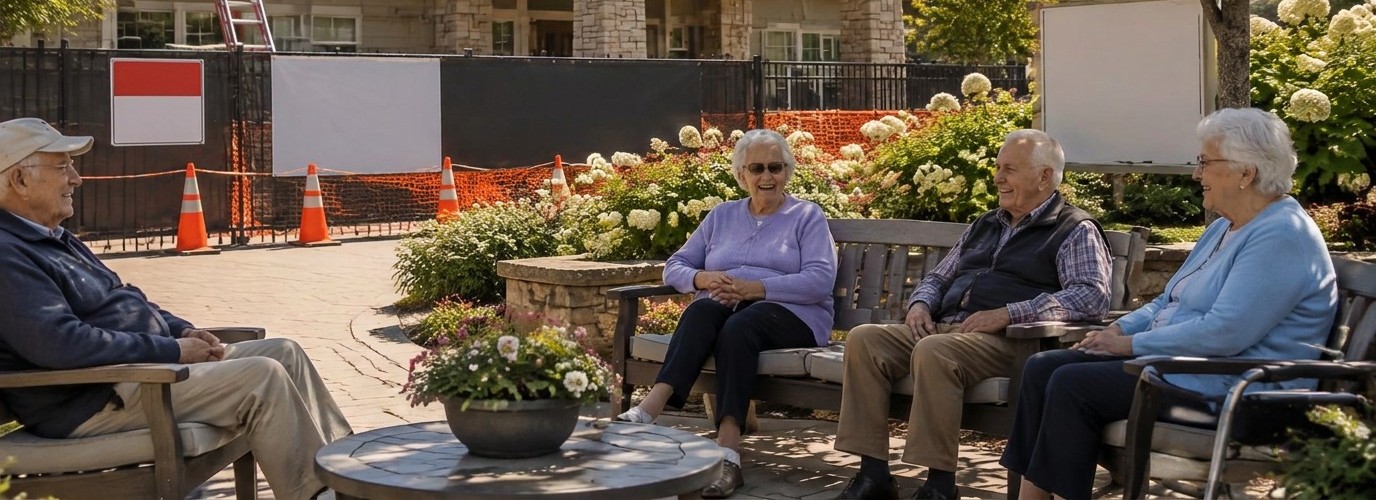
Roofing for facilities that cannot close.
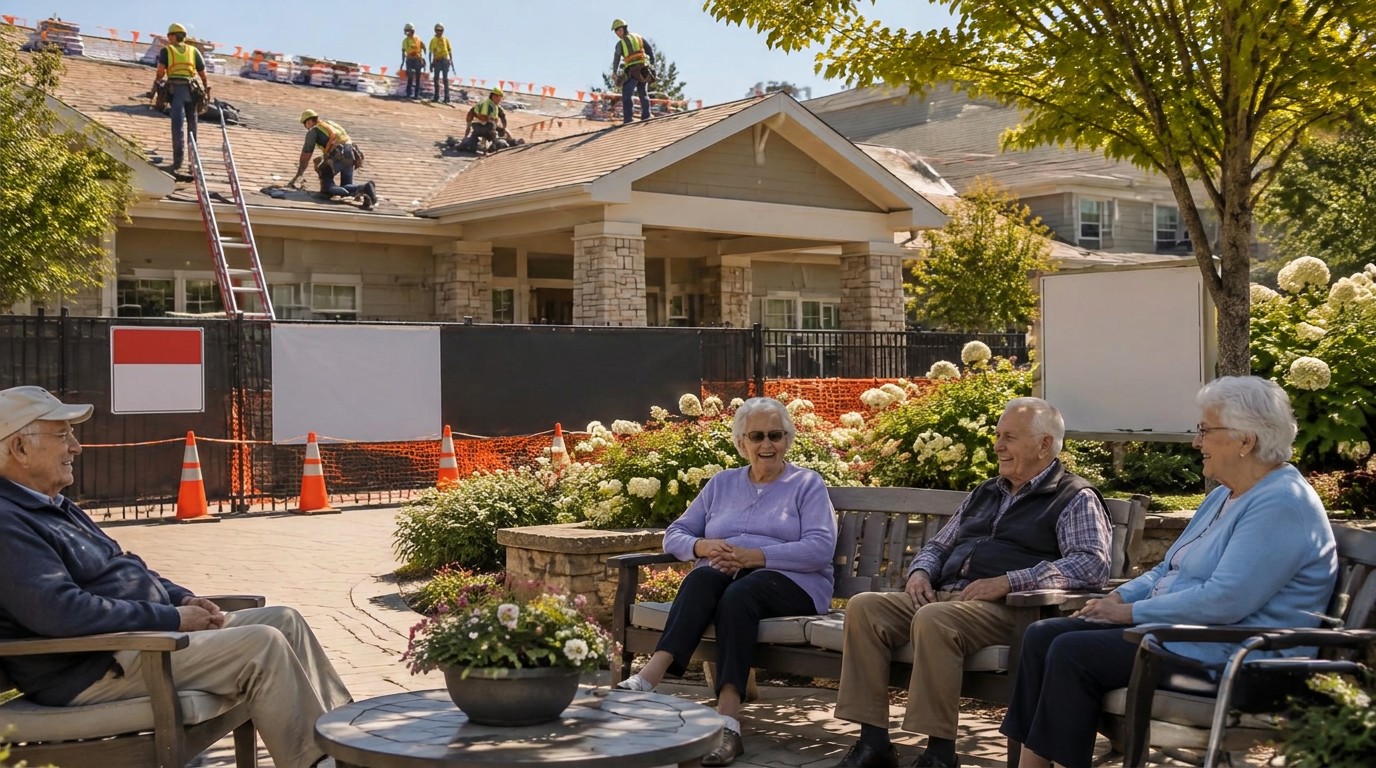
Hospitals, skilled nursing, assisted living, and memory care facilities across Greater Houston. We plan the work in phases so residents, staff, and clinical operations barely notice the project.
A care facility is one of the hardest buildings to re-roof well. Residents are there around the clock, rooftop units feed air into rooms with people who have health conditions, and transport lanes can't be blocked for a dumpster. We plan around these needs first, then plan the roofing work. Call (281) 948-2208 or schedule an assessment.
 P91 Zero-Leak Guarantee
What we deliver
- Sections torn off and sealed the same day — never an open wing overnight
- Rooftop air intakes protected before hot work or glue work
- Ambulance, transport, and main entrance lanes kept clear the whole time
- Scheduling around rest hours, meals, and therapy blocks to limit noise
- Fully insured crews, badged in through your process and briefed on conduct
- Written condition reports for each building, for capital planning
- TPO, PVC, silicone restoration coatings, modified bitumen, and metal roofs
- 5-year P91 workmanship warranty; manufacturer warranty options explained up front
Air quality is the first constraint, not the last
Rooftop units on a nursing home or hospital pull outside air straight into resident and clinical spaces. Before any hot work, glue, or tear-off begins, we walk the roof with your facility engineering team, find every air intake in the work zone, and agree on how to protect it or schedule around it so odor and dust never reach the inside. Where possible, we use low-odor roofing products to remove the problem entirely.
Phasing an occupied building
We divide the roof into sections sized so each one is torn off, insulated, and sealed in the same day. This one rule removes the biggest risk in this kind of work — a storm hitting an open wing overnight. We schedule wings with the most vulnerable residents around their rest periods, and we give staff a day-by-day calendar so they know exactly what's happening above which rooms and when.
Restore before you replace where you can
Full replacement is the most disruptive option, so we check whether it's really needed first. An infrared thermal moisture scan done by our imaging partner shows whether the insulation underneath is wet. If it's dry, a silicone restoration coating can add a decade or more of life with almost no tear-off, no odor, and much less disruption to your operations. It also counts as a maintenance expense instead of a big capital project.
Systems we specify for care facilities
Most facility roofs use TPO or PVC single-ply membrane roofing — reflective, heat-welded, and durable under the heavy rooftop equipment these buildings carry. PVC is the better choice over commercial kitchens where grease exhaust is a factor. If ownership or a lender requires a manufacturer's NDL warranty, we plan and install the roof to meet the manufacturer's requirements. The manufacturer issues and approves that warranty, not P91, and we'll walk you through what it takes before work starts.
After handover: keeping the roof off the risk register
Facility roofs usually fail at drains, curbs, and penetrations long before the main membrane wears out. Scheduled preventative maintenance catches those problems early, keeps you meeting manufacturer warranty requirements, and produces the documentation your surveys and capital planning both need.
Proof: Conroe Health Care Center
We replaced about 40,000 square feet of shingle roof over an active care facility in Conroe while residents stayed in place the whole time. See the Conroe Health Care Center case study for the phasing, the photos, and how the site was managed day to day.
FAQ
Can you re-roof a facility while residents stay in place?+
Yes — that's the normal case. We break the roof into sections small enough to tear off and seal the same day, so an occupied wing is never left open. We also work around resident rooms and common areas during quiet hours.
How do you control odor, dust and noise for vulnerable residents?+
We work with your facility engineering team to protect and temporarily block off rooftop air intakes before any hot work or glue work starts. We choose low-odor roofing products where we can, keep debris contained at the roof edge, and keep the loudest work inside an agreed time window.
Do you work around ambulance bays, entrances and patient transport?+
Always. We place staging areas, dumpsters, and lifts off the emergency and transport routes, and we keep those lanes clear the whole time. We walk through the access plan with your facilities lead before a single truck arrives.
Are your crews insured and background-appropriate for a care setting?+
Our crews are fully insured. They go through your badging process and get briefed on site rules before they step on the property — no contact with residents, and they use only designated entrances and break areas.
Can you help us budget replacement across a portfolio of buildings?+
Yes. We give you a written condition report for each roof, with photos, square footage, roof type, and an estimate of how much life it has left. This is formatted for capital planning, so you can schedule buildings across budget years instead of reacting to leaks as they happen.
What happens if a leak hits a clinical space mid-project?+
We keep materials on site to seal the roof right away and respond the same day. For interior water damage and drying, our local restoration partner handles that work while we fix the roof.
Planning a commercial roof project?
We'll give you an assessment, a written condition report, and a budget plan you can take to ownership. Our crews are fully insured, and every job has a 5-year workmanship warranty.