
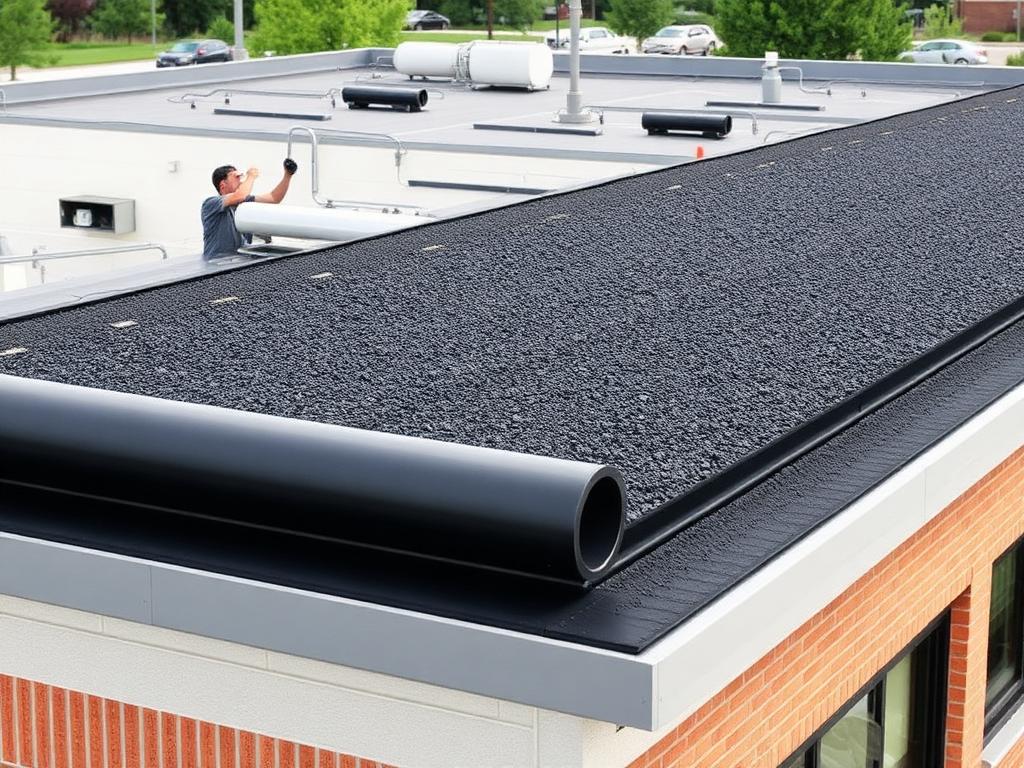
Modified bitumen & built-up roofing (BUR).
Torch, hot-mop, or cold-adhesive application — asphalt-based systems with decades of proven performance on Houston commercial roofs.
Modified bitumen and built-up roofing represent the older, proven end of the commercial roofing spectrum — asphalt-based systems that have protected flat and low-slope buildings for generations. They remain a sound, often economical choice, and the application method you choose matters as much as the material itself.
 P91 Zero-Leak Guarantee
What we deliver
- Torch-applied, hot-mopped, or self-adhered application methods
- 3-4 ply BUR systems built for redundancy
- Granulated cap sheet or gravel surfacing for impact resistance
- Tapered insulation to correct drainage and reduce ponding
- Recover or tear-off decided by moisture survey findings
- Flashing and seam detailing built for a 15-25+ year service life
Modified bitumen vs. built-up roofing: what's different
BUR is the traditional system: alternating layers of asphalt and reinforcing felt, built up on site in 3 to 4 plies and finished with a gravel or cap sheet surface. Modified bitumen is a more modern, factory-manufactured evolution of the same asphalt chemistry, using polymer modifiers for added flexibility, applied in fewer plies and generally faster to install. Neither is objectively better — BUR's redundancy and long track record still make sense on some buildings, while modified bitumen's speed and flexibility fit others.
Application methods: torch, hot mop, and cold adhesive
Modified bitumen can be torch-applied, hot-mopped with hot asphalt, or cold-applied with self-adhering backing. Torch and hot-mop methods require open flame or hot material handling and strict fire-safety protocols on the roof; self-adhered systems skip that entirely, which is why they're often specified for occupied buildings, roofs near flammable materials, or projects where odor and fire risk during application are a real concern for tenants below.
Ply count, insulation, and drainage design
BUR ply count — typically 3 to 4 layers — adds redundancy against punctures and water intrusion but also adds weight, which matters on older structures. On both BUR and modified bitumen systems, we specify tapered insulation to route water to drains rather than relying on the membrane to tolerate standing water indefinitely; persistent ponding accelerates asphalt aging regardless of ply count.
Surfacing choices: gravel, cap sheet, and hail resistance
A gravel-ballasted BUR surface and a granulated cap sheet modified bitumen surface both provide a wear layer that helps absorb hail and foot-traffic impact, but the insulation and cover board beneath the surface layer matter just as much to overall impact resistance. We evaluate the full assembly, not just the visible surfacing, when specifying a system for hail-prone areas.
Recover, tear-off, and long-term maintenance
Modified bitumen recover over an existing sound BUR or modified bitumen roof is common and cost-effective, but only after a moisture survey confirms the existing insulation and deck are dry. Where moisture or structural issues turn up, a full tear-off is the right call. After installation, flashing and seam condition — not just the field membrane — drive most of the roof's 15-25+ year service life, which is why we build these systems into ongoing maintenance programs rather than treating installation as a one-time event.
FAQ
What's the difference between modified bitumen and built-up roofing (BUR)?+
BUR is a traditional multi-ply system built from alternating layers of asphalt and reinforcing felt, finished with a gravel or cap sheet surface. Modified bitumen is a more modern evolution — factory-manufactured sheets with polymer-modified asphalt that are torch-applied, hot-mopped, or self-adhered in fewer layers. Modified bitumen generally installs faster and offers more flexibility across temperature swings; BUR has a very long track record and remains a solid, economical option on the right building.
How is modified bitumen applied — torch, hot mop, or cold adhesive?+
All three methods are used depending on the building, code requirements, and job conditions. Torch-applied heats the underside of the sheet to bond it; hot-mopped uses hot asphalt applied between plies; cold-adhesive (self-adhered) systems use pressure-sensitive backing and skip open flame or hot asphalt entirely, which is often preferred on occupied buildings for fire-safety and odor reasons.
How many plies does a BUR system need?+
Traditional BUR systems use 3 to 4 plies of felt saturated with asphalt, though the exact number depends on the manufacturer specification and the roof's exposure and slope. More plies generally mean more redundancy against punctures and water intrusion, at the cost of additional weight and material.
Does modified bitumen or BUR handle ponding water and hail?+
Both systems tolerate occasional ponding, but persistent standing water accelerates aging on any asphalt-based roof and should be corrected with tapered insulation rather than tolerated. For hail, a gravel-surfaced BUR or a granulated cap sheet modified bitumen roof both provide a wear layer that absorbs impact reasonably well; the insulation and cover board underneath matter as much as the surface layer.
Can modified bitumen or BUR be installed as a recover?+
Modified bitumen is commonly installed as a recover over an existing sound BUR or modified bitumen roof. Whether that's the right call depends on a moisture survey of the existing roof — recovering over wet insulation or a deteriorated deck just carries the problem forward. Full BUR tear-off and rebuild is more disruptive and generally reserved for roofs with structural or widespread moisture issues.
How long do modified bitumen and BUR roofs typically last?+
A well-installed and maintained BUR or modified bitumen roof commonly lasts 15-25+ years, with plenty of variation based on ply count, insulation, drainage design, and how consistently the roof gets inspected and maintained. Flashing and seam maintenance matter more to lifespan than the base material choice.
Planning a commercial roof project?
Assessment, condition report, and a phased budget you can take to ownership. Fully insured crews, 5-year workmanship warranty.