
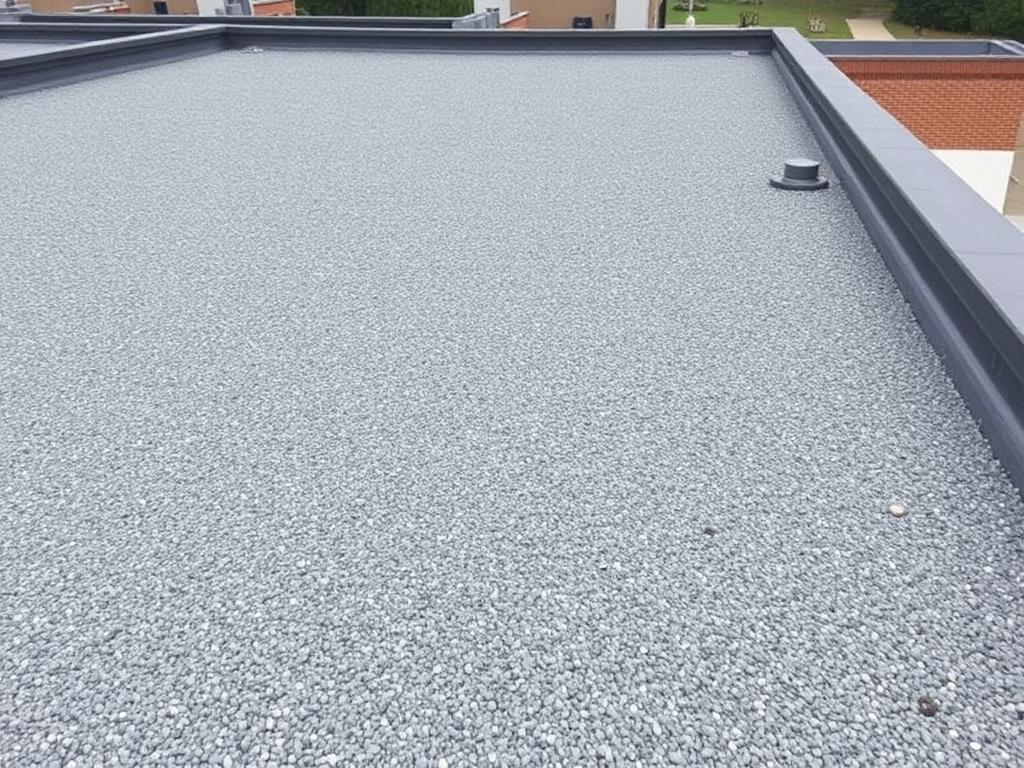
Commercial EPDM roofing across Greater Houston.
A decades-proven synthetic rubber membrane with flexible attachment methods and strong impact resistance.
EPDM rubber roofing has been used on commercial flat roofs since the 1960s, and it's still a sound option for buildings where flexibility, impact resistance, and attachment flexibility matter more than a bright white reflective surface. Here's how we scope, seam, and detail an EPDM system properly.
 P91 Zero-Leak Guarantee
What we deliver
- 45, 60, and 90 mil membrane thickness options
- Mechanically fastened, fully adhered, or ballasted attachment
- Taped seams inspected lap by lap before sign-off
- Strong hail and impact resistance at 60/90 mil
- Tear-off or recover based on deck and insulation condition
- Phased scheduling for occupied or multi-building properties
What EPDM is and where it fits
EPDM (ethylene propylene diene monomer) is a synthetic rubber sheet membrane, most commonly black, that's been a commercial roofing standard for over fifty years. Unlike TPO and PVC, which are heat-welded thermoplastics, EPDM is a thermoset rubber that stays flexible across wide temperature swings and has a long, well-documented service history. It's a strong choice for owners who value that track record and don't require a reflective white surface.
Membrane thickness and attachment method
EPDM is available in 45, 60, and 90 mil thicknesses. We spec 60 mil for most commercial buildings, moving up to 90 mil for roofs with heavy equipment or foot traffic. Attachment can be mechanically fastened, fully adhered, or ballasted with stone or pavers. Ballasted systems can reduce material and labor cost but require confirming the roof structure can carry the additional dead load before we recommend it — that's a structural question, not just a roofing one.
Seaming: the detail that decides how long EPDM lasts
Because EPDM seams are bonded with tape and adhesive rather than heat-welded, seam quality depends entirely on surface prep, primer application, roller pressure, and cure time. A rushed seam is the number one cause of an EPDM roof leak. We follow manufacturer seam specifications precisely and inspect every lap before moving to the next section, rather than seaming the whole roof and inspecting at the end.
Hail resistance and UV exposure in Houston
EPDM's rubber composition absorbs hail impact well, and 60-90 mil membrane holds up to the hail sizes typical in this region better than thinner sheet. Because it's typically black, EPDM absorbs more solar heat than white TPO or PVC, which is a real consideration for a building's cooling costs even though the membrane itself has good UV durability. White EPDM and reflective coatings are available where heat gain is a bigger concern than material cost.
Recover, tear-off, and phased project planning
As with any membrane, a recover only makes sense over a dry, structurally sound existing roof — wet insulation or a failed deck calls for tear-off regardless of budget preference. For multi-building portfolios, we can sequence EPDM re-roofing building by building and align billing with each phase, so the project fits an annual capital plan instead of one large expense.
FAQ
What is EPDM and how is it different from TPO or PVC?+
EPDM is a synthetic rubber membrane, usually black, that's been used on commercial flat roofs for decades. Unlike TPO and PVC, which are thermoplastics joined by heat-welding, EPDM is a thermoset material joined with seam tape and adhesive. It flexes well across temperature swings and has a long track record, though it doesn't reflect heat the way white TPO or PVC does unless a white EPDM or coating is specified.
What membrane thickness is used for EPDM roofs?+
EPDM is commonly installed in 45 or 60 mil thickness, with 90 mil available for high-traffic or high-durability applications. Thicker membrane resists punctures better and is worth considering on roofs with heavy mechanical equipment or foot traffic.
How are EPDM seams sealed if they're not heat-welded?+
EPDM seams are joined using seam tape with a specially formulated adhesive, or in some systems a liquid-applied seam primer and tape combination. The seam is the most critical detail on any EPDM roof, since it's a bonded joint rather than a fused one — proper surface prep, roller pressure, and cure time all affect how long that bond lasts. We follow manufacturer seam specifications exactly and inspect every lap before moving on.
Is EPDM mechanically fastened, fully adhered, or ballasted?+
All three attachment methods exist for EPDM. Mechanically fastened systems use plates and fasteners through the membrane into the deck; fully adhered systems use bonding adhesive across the whole roof; ballasted systems use loose stone or pavers to hold the membrane down without fully attaching it. The right method depends on deck type, wind exposure, and roof loading — ballasted systems require a structural capacity check before they're an option.
Does EPDM perform well against Houston hail and UV?+
EPDM has a long history of good hail resistance, especially at 60 and 90 mil thickness, because the rubber absorbs impact rather than cracking. UV resistance is strong for a black membrane, though black surfaces do absorb more heat than white TPO or PVC — an important consideration for a building's cooling load, not just roof durability.
Can you install EPDM as a recover, or is tear-off required?+
A recover is possible over sound, dry existing roofing where code and deck conditions allow it. As with any membrane, if the deck or existing insulation is wet or damaged, a tear-off is the right call rather than covering the problem.
Planning a commercial roof project?
Assessment, condition report, and a phased budget you can take to ownership. Fully insured crews, 5-year workmanship warranty.