
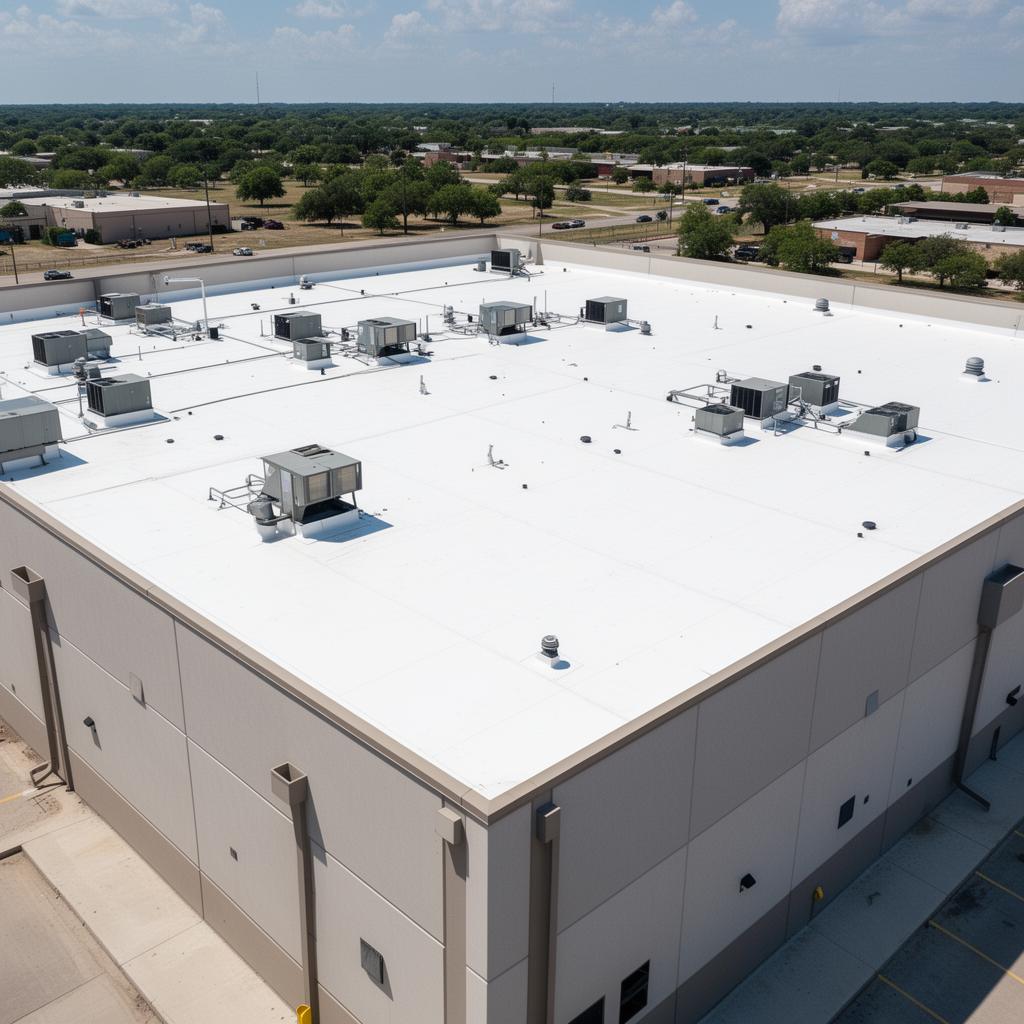
Commercial TPO roofing for Greater Houston buildings.
Heat-welded seams, tapered insulation, and membrane thicknesses matched to your roof's traffic and exposure.
TPO (thermoplastic polyolefin) is the most widely installed single-ply membrane on commercial flat and low-slope roofs in the country, and for good reason in a market like Houston: it reflects UV and heat, welds into a seamless surface, and comes in a thickness to fit almost any budget or risk tolerance. This page covers how we scope, install, and detail TPO systems for owners and property managers across the metro.
 P91 Zero-Leak Guarantee
What we deliver
- 45, 60, and 80 mil membrane options matched to traffic and exposure
- Mechanically fastened or fully adhered attachment, per wind-uplift requirements
- Every seam heat-welded and probe-tested before handover
- Tapered insulation systems engineered to eliminate ponding
- Tear-off or recover, decided on deck and insulation condition, not convenience
- Phased billing available for capital planning and multi-building portfolios
Membrane thickness and attachment method
TPO ships in 45, 60, and 80 mil thicknesses. Thinner membranes cost less but have less puncture and hail resistance; 60 mil is the standard specification for most commercial buildings, and we recommend 80 mil where there's heavy rooftop equipment traffic, frequent service access, or an ownership group planning to hold the asset long-term. The attachment method — mechanically fastened with plates and screws, or fully adhered with bonding adhesive — is chosen based on the deck type, required wind-uplift rating, and whether the project is new construction or a recover.
Seam welding and flashing details
TPO seams are joined with hot-air welding equipment, not glue, so a correctly welded seam becomes stronger than the sheet around it. We probe-test every seam before calling a project complete, because a cold or skipped weld is the most common failure point on a TPO roof. Flashing at parapets, curbs, drains, and penetrations gets the same welded detailing as the field membrane rather than caulk-and-hope patchwork, since those transition points are where the majority of commercial roof leaks actually start.
Drainage, tapered insulation, and ponding water
TPO membrane itself tolerates brief ponding, but standing water that lasts more than 48 hours signals a slope or drainage problem underneath, not a membrane defect. We correct that with tapered insulation systems designed to move water to drains rather than by simply installing a thicker membrane over a flat deck. Getting the insulation layout right during the assessment phase avoids a callback six months after the crew leaves.
Tear-off vs. recover, and managing tenant disruption
A recover — installing new insulation and membrane over sound existing roofing — reduces cost and keeps the job faster and quieter, which matters for occupied retail or multi-tenant buildings. It only works when the existing deck and insulation are dry and structurally sound. If moisture surveys or a probe of the deck turn up wet insulation or deck damage, we recommend a tear-off, because covering a wet roof just delays and compounds the problem. Either way we sequence work by roof section to keep the building operating during the project.
Hail, UV performance, and phased capital planning
Reflective white TPO reduces rooftop and HVAC energy loads in Houston's climate, and membrane thickness plus a hail-rated cover board are the real drivers of impact resistance during storm season — not color or brand. For ownership groups managing budgets across a fiscal year, we can phase a project by building or by roof section and bill accordingly, so the work fits a capital plan instead of forcing a single lump-sum decision.
FAQ
What thickness of TPO membrane is right for our building?+
TPO is manufactured in 45, 60, and 80 mil thicknesses. 60 mil is the common standard for most commercial roofs; 80 mil is worth the upgrade on roofs with heavy foot traffic, rooftop equipment, or a longer intended service life, since the thicker sheet resists punctures and hail impact better. 45 mil is used less often on new installs but shows up on recover projects with tight budgets.
Is TPO mechanically fastened or fully adhered?+
Both attachment methods are used depending on the deck, the wind uplift rating required, and whether it's new construction or a recover. Mechanically fastened systems use plates and screws through the insulation into the deck, which is faster and often more economical. Fully adhered systems use bonding adhesive across the whole roof, which distributes wind load more evenly and is usually specified on higher wind-exposure buildings.
How are TPO seams welded, and why does that matter?+
TPO sheets are joined with hot-air welding equipment that melts the top and bottom layers together into one continuous membrane, rather than relying on glue or tape. A properly welded seam is actually stronger than the field of the membrane itself. We test seam welds with a probe on every job before we call the roof finished, because a cold weld is the single most common cause of an early TPO leak.
Can you install TPO over an existing roof, or does it need a tear-off?+
It depends on the condition of the existing roof and local code. A recover is possible when the existing membrane and insulation are dry and structurally sound, and it reduces cost and tenant disruption since there's no demolition. If the deck is wet, the insulation has failed, or there are multiple existing roof layers already, a tear-off is the right call — recovering over a bad roof only hides the problem.
Does TPO handle ponding water and Houston hail?+
TPO itself tolerates occasional ponding without degrading, but ponding water that sits for 48+ hours points to a drainage design problem, not a membrane problem — we address that with tapered insulation rather than a thicker membrane. For hail, membrane thickness and a hail-rated cover board matter more than color; 60-80 mil TPO with a proper cover board performs well against the hail sizes typical in Greater Houston.
How much does a commercial TPO roof cost?+
Cost depends on square footage, the number of roof penetrations, whether it's a recover or tear-off, insulation requirements, and current membrane pricing. We price every roof after an on-site assessment rather than a phone estimate, and can structure billing in phases for ownership groups managing capital budgets across a fiscal year.
Planning a commercial roof project?
Assessment, condition report, and a phased budget you can take to ownership. Fully insured crews, 5-year workmanship warranty.